Friday, August 6, 2010


Potential New Link to Keratoconus


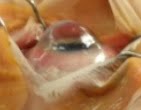
The most common and severe contraindication to LASIK eye surgery has been linked to eye rubbing. This non-inflammatory condition affects approximately 1 in 1000 patients and leads to progressive corneal thinning and protrusion (Severe coning of the cornea as seen above).

Mechanisms of rubbing-related corneal trauma in keratoconus.

Published in the journal, CORNEA, by McMonnies CW.

Experts link keratoconus to eye trauma, in particular, eye rubbing as a potential culprit for worsening keratoconus. This article is published in the journal of Cornea and concludes the following: CONCLUSIONS: For some forms of keratoconus, a reduction in shear strength and cone-forming deformation may be responses to rubbing trauma. Some of the mechanisms for corneal rubbing trauma may be relevant to post-laser-assisted in situ keratomileusis ectasia or complications following other types of corneal surgery. There appear to be indications for the control of chronic habits of abnormal rubbing.

Eye rubbing must be avoided for patients considering LASIK eye surgery as Keratoconus remains a major contraindication to laser vision correction.


Saturday, July 31, 2010

New Study shows All Laser (Bladefree) LASIK safer than conventional LASIK with a blade

New study shows all laser LASIK decreases the risk of dry eyes after LASIK. We are proud to offer the All-Laser (Femtosecond) LASIK to all our patients at Piedmont Better Vision. An abstract of the published article can be seen below.

Dry eye associated with laser in situ keratomileusis: Mechanical microkeratome versus femtosecond laser published by Salomão MQ et al, from the Cleveland Clinic.

Abstract of published article in the Journal of Cataract and Refractive Surgery.

PURPOSE: To compare the incidence of laser in situ keratomileusis (LASIK)-associated dry eye and the need for postoperative cyclosporine A treatment after flap creation with a femtosecond laser and a mechanical microkeratome. SETTING: Cole Eye Institute, Cleveland, Ohio, USA. METHODS: Eyes were randomized to flap creation with an IntraLase femtosecond laser (30 or 60 kHz) or a Hansatome microkeratome. No patient had signs, symptoms, or treatment of dry eye preoperatively. Flap thickness was determined by intraoperative ultrasonic pachymetry. Slitlamp assessments of the cornea and need for postoperative dry-eye treatment were evaluated preoperatively and 1 month postoperatively. RESULTS: The flap was created with the femtosecond laser in 113 eyes and with the microkeratome in 70 eyes. The difference in mean central flap thickness between the femtosecond group (111 mum +/- 14 [SD]) and the microkeratome group (131 +/- 25 mum) was statistically significant (P<.001). The incidence of LASIK-associated dry eye was statistically significantly higher in the microkeratome group (46%) than in the femtosecond group (8%) (P<.0001), as was the need for postoperative cyclosporine A treatment (24% and 7%, respectively) (P<.01). In the microkeratome group, there was no correlation between thick flaps and a higher incidence of LASIK-induced dry eye. CONCLUSIONS: Eyes with femtosecond flaps had a lower incidence of LASIK-associated dry eye and required less treatment for the disorder. In addition to neurotrophic effects from corneal nerve cutting, other factors may be important because no correlation was found between flap thickness (or ablation depth) and the incidence of LASIK-induced dry eye.

Monday, July 5, 2010

International Summer School in Lecce, Italy


The International Summer School in Lecce, Italy. Hosted by the University of Bologna, Dept. of Ophthalmology. Professor Sergio Scalinci hosted a great session! An honor to be a part of the faculty for the superb meeting.

Friday, July 2, 2010

1st European Cornea Society (EUCornea Meeting) in Venice, Italy


What an honor to speak at the inaugural annual European Cornea Society Meeting in Venice, Italy. This was my first time in Venice. What a beautiful and amazing city!! Excellent meeting and the Italians clinician scientists were perfect hosts.


Spent a few days before the meeting in Florence to learn about the amazing history of Italy and its Florentine artists like Michelangelo. Also took a tour of the countryside in Tuscany. Magnificent views!


Sunday, June 6, 2010

Dr. Lee honored by Premier Surgeon


Premier Surgeon, a new monthly journal publication developed by Ocular Surgery News and published by Slack, Inc, has selected 250 of the nation's top innovators and leaders in vision correction using multifocal and accommodative lens implants. I am honored to be selected in this esteemed group of specialists throughout the United States. You can view the PS 250 list at the following link:
http://www.eyeconsultants.net/PDF%20downloads/premier-surgeon-list-ps250.pdf

Annual Meeting for America's Leading Corneal Transplant Surgeons


Just returning from the annual Eye Bank Association of America's Annual Meeting in Hilton Head. Congratulations to Bruce Varnum, CEO and President of the Georgia Eye Bank, for completing his term as Chair of the Eye Bank Association of America (EBAA). While I spend a good proportion of my time doing cataracts and LASIK, I also serve as one of the medical directors to the Georgia Eye Bank and perform a large number of corneal transplants to patients in Tennessee, Georgia, and adjacent states in the southeast. It is truly an honor to work with Bruce and the EBAA, the organization that provides corneas to people all over the country who are blind and need cornea transplants to see. Bruce is a true example of "paying it forward". After receiving cornea transplants at a young age after going blind, he has paid it forward to pave the way for many others to receive sight through the gift of cornea transplantation. Myself and all of Georgia should thank Bruce!! We are very fortunate to have him here in Georgia as the head of OUR eye bank!!

Thursday, May 6, 2010

The World Cornea Congress VI- Meeting of World's Elite Cornea Specialists


World Cornea Congress VI was held in Boston this year. This is a 2 day meeting that is held every 5 years and involves presentations of new research and cutting edge cornea and refractive topics from the best cornea specialists all over the world. I was asked to present data on correction of astigmatism after corneal transplantation. This included my data on laser vision correction for astigmatism in these patients using our state-of-the-art technology at Piedmont Better Vision.


This was my first visit to Boston. What a great city!! I was able to visit some historical places between meeting days including the countries oldest restaurant.