Sunday, October 3, 2010

IMPLANTABLE CONTACT LENS AN OPTION FOR VISION CORRECTION

A report from New Zealand Implantable contact lens (ICL) results. Study published in July of 2010 in Clinical and Experimental Ophthalmology.


A large study on the implantable contact lens (ICL)results at 1 year showed 99% of patients in the study (76/77) had postoperative best-corrected visual acuity (BCVA) better than or equal to preoperative values, whereas 78% (60/77) gained up to one line BCVA and 1% (1/77) lost one line BCVA. Nearsightedness (myopia) ranged from -2.50 to -15.00 Diopters and astigmatism ranged from 1.00 to 7.00 Diopters of correction. Indications for ICL were: myopia too high for LASIK (73%), cornea too thin for LASIK (44%) and contact lens intolerance (33%). Night halos were reported in 10% (8/77) of eyes at 12 months. One ICL was removed due to unrecognized preoperative glaucoma.

This study is the largest reported series of toric ICL implantation in New Zealand. It supports the safety, efficacy and predictability of toric ICLs to treat myopia and astigmatism.

Tuesday, September 7, 2010

BIOSYNTHETIC CORNEAS - A MAJOR BREAKTHROUGH

Eyegenix™ Artificial Cornea Achieves Major Advancement Towards Curing Corneal Blindness


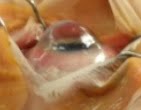
Dr May Griffith of the research team inspects a biosynthetic cornea that can be implanted into the eye to repair damage and restore sight


Read more: http://www.dailymail.co.uk/health/article-1306134/Artificial-corneas-restore-sight-partially-blind-patients-grown-lab.html#ixzz0ytTV7HNA


Eyegenix™, the ophthalmic division of Cellular Bioengineering, Inc. (CBI), announced that the results of a pilot clinical trial using a synthetic cornea for which Eyegenix™ holds the exclusive global license for transplantation were published in the peer-reviewed journal, Science Translational Medicine (Volume 2, Issue 46, August, 25, 2010). The publication reported two year results of a clinical trial that transplanted bioengineered corneas into 10 patients who were visually impaired on the transplantation wait list. All patients regained nerve sensation and tear formation without the prolonged use of anti-rejection drugs, and six of the patients improved to best corrected post-operative acuity of 20/40 with contact lenses. As a group, this improvement was comparable to a cohort treated with traditional human allograft transplant.

Eyegenix™ has the exclusive worldwide commercial corneal transplantation rights to this biosynthetic material, which holds the potential promise to cure blindness in the estimated 10 million people who suffer from corneal disease but have no access to a donor for transplant. Invented at the University of Ottawa and the National Research Council of Canada by Drs. May Griffith, David Carlsson and their colleagues, it is under collaborative development by CBI / Eyegenix™, the University of Ottawa Health Research Institute, and Dr. Per Fagerholm from University of Linkoping, Sweden, the surgeon who conducted the transplants and lead author of the publication.

Although corneal transplantation is a successful procedure that is performed more often than all other types of organ transplants combined, it is only able to impact less than 2% of patients with corneal blindness worldwide due to a lack of donors. The material under exclusive license to Eyegenix™ is unique in its approach of replacing a human donor with a completely synthetic, transplantable cornea designed to promote tissue regeneration, which can be an off-the-shelf solution to a huge access problem.

"CBI is extremely proud to be part of this effort," said Mark Mugiishi, M.D., Medical Director of CBI. "Our inventors, scientific and development team members, and clinical champions have emerged from all parts of the world. We have positioned ourselves as forerunners in the race to bring vision back to 10 million blind people in the world, and that's something all of us are incredibly passionate about."

Biosynthetic cornea used for transplantation in a patient with severe keratoconus

Regeneration of the Cornea: Stem cells and the Eye


Stem Cell Transplantation / Regeneration of the Cornea

A regenerative treatment that uses stem cells taken from the patient's own eyes is helping some blind patients see again.

Italian researchers report that the stem cell procedure resulted in successful corneal transplantation in three-fourths of patients with blindness in one or both eyes, caused in most patients by chemical or thermal burns.

Vision was at least partially restored in patients who did not have major damage to other parts of the affected eye, says study researcher Graziella Pellegrini, PhD, of the University of Moderna's Center for Regenerative Medicine.

Pellegrini and colleagues have performed corneal transplants in around 250 patients over the last decade using the stem cell technique, but it remains experimental and is not being done in the U.S.

Their latest study is published in the New England Journal of Medicine. The findings were also reported last week in San Francisco at a meeting of the International Society for Stem Cell Research.

"We followed the patients in this study for an average of three years and as long as a decade," she tells WebMD. "We have shown that the results can last for many years."

Regeneration of Corneas
The study included 112 patients with damaged corneas who received the stem cell treatment between 1998 and 2006.

The procedure involved extracting healthy stem cells from the limbus, which is located between the colored and white part of the eye.

Pellegrini says the procedure can be done even when only a tiny portion of the limbus remained undamaged.

Stem cells taken from the biopsied limbus tissue grew into healthy corneal tissue in a little over two weeks, she says, and the healthy tissue was then grafted onto the damaged eye.

When the procedure was successful, the damaged, opaque cornea became clear again and the eye looked normal.

In all, 77% of patients had a successful first or second graft, while the procedure was considered a partial success or failure in 13% and 10% of cases, respectively.

People with corneal damage from chemical and thermal burns often have symptoms including light sensitivity, itching, and pain. These symptoms went away or were much less severe in the successfully treated patients.

Following successful transplant, about half of the patients had further surgeries to improve visual acuity and most showed at least some improvement in vision. One patient achieved normal vision with the stem cell grafting alone.

Regenerative Treatments for Heart and Liver
University of California, Davis ophthalmology professor Ivan Schwab, MD, was among the first to perform the stem cell transplant procedure, based on Pellegrini's early work, almost a decade ago.

He treated about 15 patients, and while many showed early responses, the benefits did not last.

"This study is remarkable because these researchers have shown not only that this technique works, but that it works for up to 10 years in some cases," he tells WebMD.

He adds that regenerative treatments show promise for a wide range of illnesses, including those involving the bladder, liver, and the heart.

"We are not talking about regenerating the entire liver or heart," he says. "The concept that you have to grow a whole liver or a whole heart is not correct."

He points out that researchers are already working on a heart "patch" that can help a damaged heart function better.

Read more about this study in the New England Journal of Medicine or the internet at the following address:

http://www.webmd.com/eye-health/news/20100623/stem-cell-treatment-restores-vision

Friday, August 6, 2010


Potential New Link to Keratoconus


The most common and severe contraindication to LASIK eye surgery has been linked to eye rubbing. This non-inflammatory condition affects approximately 1 in 1000 patients and leads to progressive corneal thinning and protrusion (Severe coning of the cornea as seen above).

Mechanisms of rubbing-related corneal trauma in keratoconus.

Published in the journal, CORNEA, by McMonnies CW.

Experts link keratoconus to eye trauma, in particular, eye rubbing as a potential culprit for worsening keratoconus. This article is published in the journal of Cornea and concludes the following: CONCLUSIONS: For some forms of keratoconus, a reduction in shear strength and cone-forming deformation may be responses to rubbing trauma. Some of the mechanisms for corneal rubbing trauma may be relevant to post-laser-assisted in situ keratomileusis ectasia or complications following other types of corneal surgery. There appear to be indications for the control of chronic habits of abnormal rubbing.

Eye rubbing must be avoided for patients considering LASIK eye surgery as Keratoconus remains a major contraindication to laser vision correction.


Saturday, July 31, 2010

New Study shows All Laser (Bladefree) LASIK safer than conventional LASIK with a blade

New study shows all laser LASIK decreases the risk of dry eyes after LASIK. We are proud to offer the All-Laser (Femtosecond) LASIK to all our patients at Piedmont Better Vision. An abstract of the published article can be seen below.

Dry eye associated with laser in situ keratomileusis: Mechanical microkeratome versus femtosecond laser published by Salomão MQ et al, from the Cleveland Clinic.

Abstract of published article in the Journal of Cataract and Refractive Surgery.

PURPOSE: To compare the incidence of laser in situ keratomileusis (LASIK)-associated dry eye and the need for postoperative cyclosporine A treatment after flap creation with a femtosecond laser and a mechanical microkeratome. SETTING: Cole Eye Institute, Cleveland, Ohio, USA. METHODS: Eyes were randomized to flap creation with an IntraLase femtosecond laser (30 or 60 kHz) or a Hansatome microkeratome. No patient had signs, symptoms, or treatment of dry eye preoperatively. Flap thickness was determined by intraoperative ultrasonic pachymetry. Slitlamp assessments of the cornea and need for postoperative dry-eye treatment were evaluated preoperatively and 1 month postoperatively. RESULTS: The flap was created with the femtosecond laser in 113 eyes and with the microkeratome in 70 eyes. The difference in mean central flap thickness between the femtosecond group (111 mum +/- 14 [SD]) and the microkeratome group (131 +/- 25 mum) was statistically significant (P<.001). The incidence of LASIK-associated dry eye was statistically significantly higher in the microkeratome group (46%) than in the femtosecond group (8%) (P<.0001), as was the need for postoperative cyclosporine A treatment (24% and 7%, respectively) (P<.01). In the microkeratome group, there was no correlation between thick flaps and a higher incidence of LASIK-induced dry eye. CONCLUSIONS: Eyes with femtosecond flaps had a lower incidence of LASIK-associated dry eye and required less treatment for the disorder. In addition to neurotrophic effects from corneal nerve cutting, other factors may be important because no correlation was found between flap thickness (or ablation depth) and the incidence of LASIK-induced dry eye.

Monday, July 5, 2010

International Summer School in Lecce, Italy


The International Summer School in Lecce, Italy. Hosted by the University of Bologna, Dept. of Ophthalmology. Professor Sergio Scalinci hosted a great session! An honor to be a part of the faculty for the superb meeting.

Friday, July 2, 2010

1st European Cornea Society (EUCornea Meeting) in Venice, Italy


What an honor to speak at the inaugural annual European Cornea Society Meeting in Venice, Italy. This was my first time in Venice. What a beautiful and amazing city!! Excellent meeting and the Italians clinician scientists were perfect hosts.


Spent a few days before the meeting in Florence to learn about the amazing history of Italy and its Florentine artists like Michelangelo. Also took a tour of the countryside in Tuscany. Magnificent views!